🌸🙏 शक्ति रूपेण संस्थिता – नवरात्रि की शुभकामनाएं 🙏🌸
हमें गर्व है कि iNext जागरण हिंदी दैनिक समाचार पत्र ने नवरात्रि के पावन अवसर पर महिला शक्ति, उनके योगदान और समाज निर्माण में उनकी भूमिका पर एक विशेष आलेख प्रकाशित किया।
नवरात्रि केवल उपासना का पर्व नहीं है, बल्कि यह नारी शक्ति के उत्सव का प्रतीक है—शिक्षा, स्वास्थ्य, संस्कृति और सामाजिक परिवर्तन में महिलाओं के अद्वितीय योगदान को नमन करने का समय है।
माँ दुर्गा के हर स्वरूप में हम उन सभी महिलाओं को प्रणाम करते हैं, जो साहस, सेवा और समर्पण से समाज को नई दिशा प्रदान करती हैं।
✨ इस नवरात्रि हम सब संकल्प लें –
✅ हर महिला का सम्मान करेंगे
✅ उनकी शिक्षा और आत्मनिर्भरता को बढ़ावा देंगे
✅ समाज में समानता और न्याय के लिए मिलकर कदम बढ़ाएंगे
🌺 शक्ति है – तो संस्कृति है।
शक्ति है – तो मानवता है।
शक्ति है – तो समाज और देश है। 🌺
🙏 नवरात्रि की हार्दिक शुभकामनाएं! 🙏
🌸🙏 Shakti Rupen Sansthita – Navratri Greetings 🙏🌸
We are proud that iNext Jagran Hindi Daily has honored women’s strength and contribution through a special feature on the auspicious occasion of Navratri.
Navratri is not only a festival of worship but also a celebration of women’s empowerment—their role in education, health, culture, and social transformation.
In every form of Goddess Durga, we salute all women who, with courage, compassion, and dedication, guide society toward a better future.
✨ This Navratri, let us pledge –
✅ To respect every woman
✅ To promote her education and independence
✅ To walk together for equality and justice
🌺 Where there is Shakti, there is culture.
Where there is Shakti, there is humanity.
Where there is Shakti, there is society and nation. 🌺
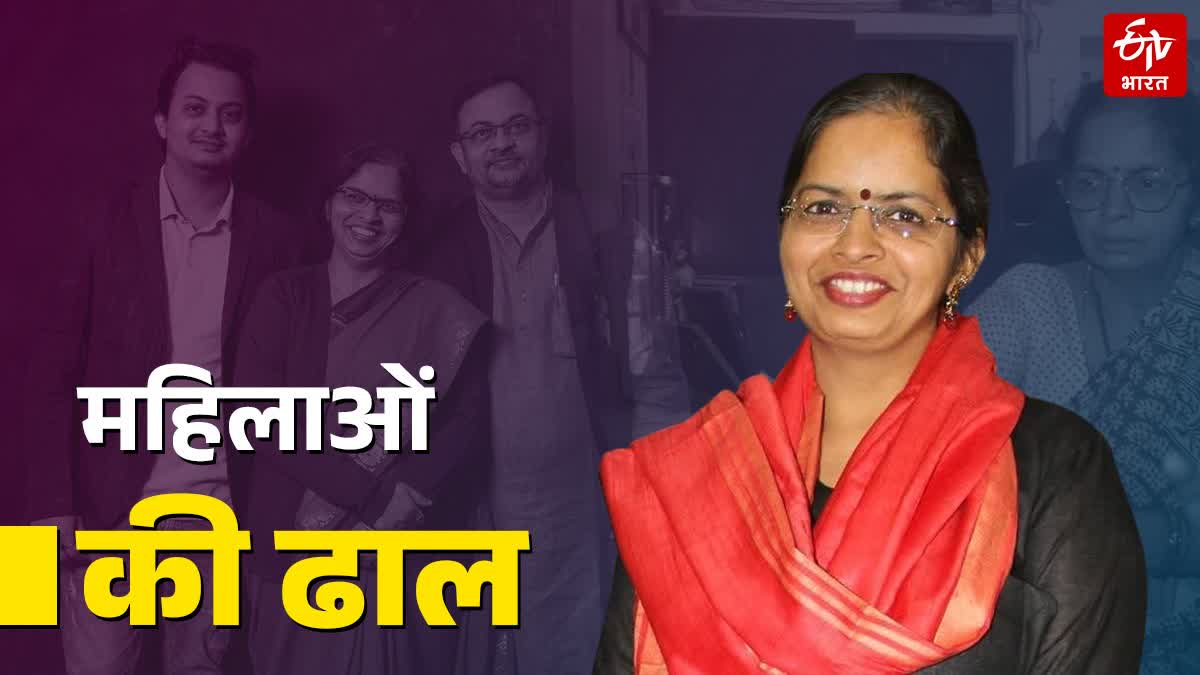
महिलाओं के हक की लड़ी लड़ाई; बाल विवाह के खिलाफ उठाई आवाज, जानिए वाराणसी की श्रुति नागवंशी की कहानी
मशहूर गीतकार जावेद अख्तर ने वर्ष 2000 में जन मित्र पुरस्कार से किया सम्मानित.
श्रुति नागवंशी की कहानी (Photo credit: ETV Bharat)
वाराणसी : नारी शक्ति है, नारी जननी है, नारी अगर कुछ करने की ठान ले तो फिर दिन रात एक कर देती है. आज हम नवरात्र पर ऐसी ही एक महिला की कहानी बताने जा रहे हैं. बनारस की इस महिला ने करीब 30 वर्षों से दलित महिलाओं के साथ मिलकर महिला उत्पीड़न, बालश्रम और समाज में व्याप्त तमाम विसंगतियों को दूर करने की लड़ाई लड़ी है. जी हां, हम बात कर रहे हैं बनारस की श्रुति नागवंशी की. श्रुति महिलाओं की सशक्त ढाल बनकर उनके साथ खड़ी दिखाई देती हैं. पति डॉ. लेनिन रघुवंशी के साथ बालश्रम की लड़ाई शुरू करने वाली इस महिला ने आज अपनी अलग पहचान बनाई है.
14 बाल विवाह को रोका : श्रुति के मुताबिक, वाराणसी में जन्मी ज्योति कुमारी का जीवन शुरू से ही संघर्षों से घिरा रहा. आर्थिक तंगी, सामाजिक उपेक्षा उनके लिए बड़ा चैलेंज था, लेकिन यह कठिन परिस्थितियां उनके सपनों को तोड़ नहीं सकीं. छह साल की उम्र में जब ज्योति ने एक शिक्षा केंद्र में पढ़ाई शुरू की. उनका दावा है कि ज्योति ने अब तक लगभग 14 बाल विवाह को रोका है. ऐसे में ज्योति को वह अवसर मिला, जो शायद उन्होंने कभी सपनों में भी नहीं सोचा था. उन्हें नॉर्वे में फेलोशिप मिली. वह दक्षिण युवा विनिमय कार्यक्रम का हिस्सा बनीं. इस कार्यक्रम में उन्होंने नेपाल और नॉर्वे दोनों देशों में अनुभव पाया. वहां जाकर उन्होंने जाना कि शिक्षा और स्वास्थ्य केवल व्यक्तिगत विकास नहीं, बल्कि पूरे समुदाय के उत्थान का आधार हैं. खेती कर चला रहीं घर का खर्च : वाराणसी की मंटा देवी पति की मृत्यु के बाद आर्थिक तंगी से जूझ रही थीं. कोविड की दूसरी लहर ने उन्हें और खराब स्थिति में ला दिया. श्रुति और एक संस्था ने जब उनकी मदद की, तो उनके जीवन में बड़ा बदलाव आया. उन्होंने अपने आंगन को झाड़ियों से साफ किया और सब्ज़ियां बोईं. कुम्हड़ी, नेनुआ और करेला की खेती शुरू की. अब वह अपने घर का खर्च भी चलाती हैं. बकरी पालन से उन्हें अतिरिक्त सहारा मिला.
श्रुति को मिले कई प्रतिष्ठित सम्मान : यह दो महिलाएं सिर्फ एक उदाहरण हैं. मानवाधिकार और महिलाओं के साथ बच्चों की लड़ाई लड़ रहीं श्रुति ने मानवाधिकार कार्यकर्ता के तौर पर अपनी एक अलग पहचान बनाई है. सबसे बड़ी बात यह है कि श्रुति ने रेक्स कर्मवीर चक्र (सिल्वर) सम्मान के साथ ही देश के कई प्रतिष्ठित सम्मान भी पाए हैं. उनकी सेवा के लिए देश की 100 महिलाओं में उन्हें शामिल करते हुए सम्मानित भी किया जा चुका है.
'कमजोर तबके की लड़ाई लड़ रहीं' : बनारस की रहने वाली श्रुति नागवंशी मानवाधिकार जन निगरानी समिति के माध्यम से दलितों, पिछड़ों, आदिवासी और समाज के कमजोर तबके की लड़ाई को आगे बढ़ा रही हैं. श्रुति का कहना है कि बनारस, आसपास के जनपदों, जिसमें झारखंड और छत्तीसगढ़ के कुछ हिस्से भी शामिल हैं, इन क्षेत्रों के 200 से ज्यादा इलाकों में श्रुति का यह काम आगे बढ़ रहा है.
'समिति के जरिए बालश्रम की लड़ाई शुरू की' : श्रुति बताती हैं कि उन्होंने अपने पति के साथ 30 साल पहले इस काम को शुरू किया और जन मित्र न्यास और मानवाधिकार जन निगरानी समिति के जरिए बालश्रम की लड़ाई शुरू की. वह बताती हैं कि उन्होंने देखा कि उस वक्त उन महिलाओं के सामने अपने अधिकारों के लिए बड़ा संकट था, जो मलिन बस्तियों में रहती थीं.
वह बताती हैं कि इन महिलाओं को सरकारी योजनाओं के साथ अन्य लाभ देने वाले लोग भी कहीं ना कहीं से नजरअंदाज कर रहे थे. इन्हें अस्पतालों में वह सम्मान नहीं मिलता था जो अन्य महिलाओं को दिया जाता था. अस्पताल में भी सुविधा न मिलने की वजह से जच्चा-बच्चा दोनों की जान को खतरा होता था.
'महिलाओं के हितों की लड़ाई लड़ने को ठानी' : वह बताती हैं कि इन्हीं बातों को देखकर मेरा मन बहुत विचलित हुआ और मैंने यह ठान लिया कि मुझे अब इन महिलाओं के हितों की लड़ाई को लड़ना है. और सरकारी योजनाओं से वंचित महिलाओं को ग्रामीण परिदृश्य में जाकर सम्मान और अधिकार दिलाना है, जो इससे पीछे रह जा रही हैं. बस इसी उम्मीद के साथ मैंने इस लड़ाई को शुरू किया.
'परेशानियों के बाद भी नहीं हारी हिम्मत' : श्रुति बताती हैं कि मुझे भी समय-समय पर परेशान किया गया. कभी मुझ पर मुकदमे हुए तो कभी प्रताड़ित किया गया. महिलाओं के विरोध में खड़े होने वालों ने मेरा विरोध शुरू कर दिया. मुझे पुलिसिया कार्रवाई और बार-बार घर पर पुलिस के आने और परेशान करने जैसी दिक्कतें भी हुईं, लेकिन मैंने हिम्मत नहीं हारी.
परिवार ने दिया पूरा साथ' : श्रुति बताती हैं कि मेरा परिवार कभी भी मेरे विरोध में नहीं था. वह बताती हैं कि पढ़ाई पूरी की थी कि तभी शादी हो गई, लेकिन मेरे ससुर और मेरे पति ने मेरा पूरा साथ दिया. शादी के बाद मेरा ग्रेजुएशन हुआ और ग्रेजुएशन होने के साथ ही मैंने इस लड़ाई को और मजबूती के साथ आगे बढ़ाया. आगे पढ़ने की इच्छा थी, लेकिन जिम्मेदारियां आईं
बड़ा अभियान चला रही हैं श्रुति : वह बताती हैं कि ग्रेजुएशन करके मैंने अपने काम को आगे चलते रहने की ठान ली थी. मनरेगा के तहत ग्रामीण मजदूरों पर हो रहे अत्याचार और सोशल ऑडिट के दौरान मिलने वाली गड़बड़ियों पर जब मैंने आवाज उठाई तो मुझ पर हमला हुआ. इसके बाद भी मैंने रास्ता नहीं बदला. अपने संगठन के माध्यम से वह बनारस सहित आसपास के जनपदों में बड़ा अभियान चला रही हैं.
'100 गरीब परिवारों को दिलाया लाभ' : वह बताती हैं कि इस कवायद में दो स्कूल, पांच कम्युनिटी भवन बनवाकर सरकार को समर्पित कर चुकी हैं. उनकी यह लड़ाई दलित और पिछड़ों के लिए ज्यादा है. स्वीडन की संस्था के माध्यम से 100 गरीब परिवार की लड़कियों को छात्रवृत्ति देने से लेकर अन्य कई तरह के लाभ भी श्रुति इन महिलाओं और परिवारों को दिला चुकी हैं.
महिलाओं को सरकारी योजनाओं की दी जानकारी : श्रुति का मानना है कि इस वक्त मेरे साथ बनारस, जौनपुर और सोनभद्र की लगभग तीन हजार ऐसी महिलाएं जुड़ी हैं जो कल तक अपने घरों में रहती थीं, उन्हें अधिकारों के बारे में पता ही नहीं होता था. उनके बीच जाकर उन्हें स्वास्थ्य, शिक्षा, सरकारी योजनाओं के बारे में बताकर उन्हें न सिर्फ इसका लाभ दिलवाया, बल्कि वृद्धा पेंशन, विधवा पेंशन से लेकर अन्य कई तरह के लाभ भी इन महिलाओं को दिलवाए जा रहे हैं.
किचन गार्डन की शुरुआत की : वह बताती हैं कि महिलाओं को सशक्त बनाने के लिए किचन गार्डन की शुरुआत की. 1999 में उन्होंने सामाजिक स्तर पर कार्य करने के लिए अपनी समिति की शुरुआत अपने पति के साथ की थी. उनको एनजीओ श्रेणी में 2024 में ग्रेट कंपनी इंटरनेशनल अवार्ड से भी सम्मानित किया गया. वह बताती हैं कि बाल विवाह पर भी नकेल कसने के लिए लंबी लड़ाई लड़ी.
650 से अधिक बाल विवाह को रुकवाया : वह बताती हैं कि अनहोनी और शिक्षा के डर से कम उम्र में ही लड़कियों की शादी करवा दी जाती थीं. इसकी शिकायतें जिला बाल संरक्षण इकाई, बाल कल्याण समिति, चाइल्ड लाइन या संबंधित थाने तक पहुंच ही नहीं पाती हैं. श्रुति का कहना है कि महिला व बाल संरक्षण पर काम करते हुए अब तक 650 से अधिक बाल विवाह को रुकवा चुकी हैं और यह प्रयास अनवरत जारी है जो जारी रहेगा.
श्रुति पीपुल्स विजिलेंस कमेटी और हुमन राइट्स के संस्थापक सदस्य भी हैं. सावित्रीबाई फुले महिला पंचायत जो महिलाओं के दिशा में एक सबसे महत्वपूर्ण प्रयास है. उसकी शुरुआत 2006 में ही श्रुति ने की थी. वह बताती हैं कि इस महिला पंचायत को शुरू करने का मकसद ही महिलाओं को सशक्त बनाना था, क्योंकि यह देखा गया कि दलित बस्तियों में महिलाओं पर होने वाले अत्याचार या किसी भी तरह की गलत चीज खाने तक नहीं पहुंचती थी.
महिला पंचायत की शुरुआत : वह बताती हैं कि 100 से ज्यादा ग्रामीण इलाकों में पहुंचकर महिलाओं के लिए सावित्रीबाई फुले महिला पंचायत की शुरुआत की. महिलाओं को मंच दिया. वहां पर महिलाएं अपनी बातों की चर्चा करती थीं. संगठन बनाकर थाने पहुंचती थीं. स्वास्थ्य संबंधी लाभ लेने के लिए सरकारी अस्पतालों में जाती थीं. महिलाओं को संगठित करने के उद्देश्य से इस पंचायत की शुरुआत की गई, ताकि महिलाओं को उनके अधिकार न मिलने पर महिला आवाज उठाएं और अपनी लड़ाई खुद लड़ें.
'चार ब्लॉकों के 50 गांव को चुना' : वह बताती हैं कि 2017 में जन मित्र न्यास की टीम के साथ चाइल्ड राइट्स एंड यू के सहयोग से बच्चों के स्वास्थ्य के मुद्दे पर काम करने के लिए वाराणसी जिले के चार ब्लॉकों के 50 गांव को चुना. उसका असर यह हुआ कि कुपोषित बच्चों की मृत्यु दर में कमी आई. श्रुति को 2019 में रेस्ट कर्मवीर चक्र रजत मिला, उनके काम को फिल्म अभिनेता आमिर खान ने भी स्वीकार किया और अपने टीवी शो सत्यमेव जयते में आमंत्रित किया.
जन मित्र पुरस्कार से सम्मानित : वह बताती हैं कि मशहूर गीतकार जावेद अख्तर ने उन्हें वर्ष 2000 में जन मित्र पुरस्कार से सम्मानित किया. 2016 में केंद्रीय महिला और बाल विकास मंत्रालय और फेसबुक की तरफ से न्याय तक पहुंच महिलाओं की सुरक्षा और उनके अधिकार की श्रेणी में 100 महिला अचीवर्स अवार्ड पाईं. दलित महिलाओं के अधिकार पर उनके काम के लिए उन्हें बिहार के भागलपुर स्थित गैर सरकारी संगठन अंग मदद फाउंडेशन ने उन्हें राष्ट्रीय पुरस्कार से सम्मानित किया.
सार्वजनिक शांति पुरस्कार मिला : उत्तर प्रदेश में दलित अधिकारों के लिए लड़ रही श्रुति नागवंशी और उनके पति लेनिन को यूनाइटेड किंगडम की एक मीडिया ने स्वतंत्रता समानता बंधुत्व और अन्य भारतीय संवैधानिक मूल्यों के दृष्टिकोण से भारत के नायक के रूप में उल्लेखित किया है. श्रुति को बाल अधिकारों के लिए 2020-21 का सार्वजनिक शांति पुरस्कार भी मिला है.
यह पुरस्कार मिले : भारत की शीर्ष 100 महिला उपलब्धि पुरस्कार (महिला एवं बाल विकास मंत्रालय (एमडब्ल्यूसीडी) 2016)
रेक्स कर्मवीर चक्र (2019)
सावित्री बाई फुले राष्ट्रीय पुरस्कार (2022)
कर्मवीर स्वर्ण चक्र (2024)
सार्वजनिक शांति पुरस्कार, कनाडा (2020-21)
मानव गरिमा में उत्कृष्टता के लिए बिजनेस टाइटन्स पुरस्कार (2025)
🚨 Human Rights, Justice & the Unfinished Struggle for Dignity in India
From sewer deaths to medical negligence and custodial torture — structural violence continues to rob India’s most marginalized of their dignity and lives.
Through NHRC cases, we see both hope and the limits of justice. True democracy must be measured not by state power, but by how it protects its weakest citizens.
जनमित्र न्यास: हाशिये की आवाज़ से लोकतंत्र की धड़कन तक
(Jan Mitra Nyas: From the Voices of the Margins to the Heartbeat of Democracy)
वाराणसी की धरती से निकली एक आवाज़ आज पूरे देश में लोकतंत्र और न्याय की मशाल जला रही है। यह कहानी है जनमित्र न्यास (JMN) की, जिसने दो दशक से अधिक समय से हाशिये पर खड़े लाखों लोगों को न्याय, गरिमा और आत्मनिर्भरता दिलाने का अभियान छेड़ा है।
यह प्रेरक कहानी हाल ही में देश के अग्रणी हिंदी दैनिक हिंदुस्तान अखबार में प्रकाशित हुई, जिसने जनमित्र न्यास की यात्रा और उपलब्धियों को राष्ट्रीय स्तर पर सामने रखा।
लोकतंत्र का असली पैमाना
जनमित्र न्यास का मानना है कि लोकतंत्र की मजबूती तभी संभव है जब सबसे वंचित और हाशिये पर खड़े लोगों को भी समान अवसर और अधिकार मिले। शिक्षा, स्वास्थ्य, पोषण, सम्मान और रोज़गार — ये सभी उनके कार्यक्रमों का हिस्सा हैं।
शिक्षा और युवाओं की संबल
महिला शक्ति और युवाओं की भूमिका पर ज़ोर देते हुए संगठन ने हज़ारों गांवों में जागरूकता अभियान चलाए हैं। शिक्षा को केवल डिग्री नहीं, बल्कि सशक्तिकरण और न्याय का औज़ार मानते हुए संगठन ने स्कूली बच्चों, किशोरियों और ग्रामीण महिलाओं तक पहुंच बनाई।
वैश्विक पहचान
2007 में लेनिन रघुवंशी को दक्षिण कोरिया में ग्वांग्जू मानवाधिकार पुरस्कार से सम्मानित किया गया।
ऑस्ट्रिया में मशहूर अभिनेता और कार्यकर्ता ओट्टो टॉसिग (Otto Tausig) से मुलाकात ने मानवाधिकार कार्य के वैश्विक आयामों को गहरा किया।
संविधान क्लब, नई दिल्ली में आयोजित Roundtable Discussion on Children’s Nutrition and Ultra-Processed Foods में बच्चों के स्वास्थ्य पर महत्वपूर्ण विमर्श हुआ।
समुदाय से संवाद
ग्रामीण इलाकों में जनमित्र न्यास के कार्यकर्ता सीधे समुदाय से मिलकर उनकी समस्याओं को सुनते और समाधान ढूंढते हैं। लेनिन रघुवंशी के नेतृत्व में हुई ये पहलें लोकतंत्र की जड़ों को मजबूत करने की दिशा में महत्वपूर्ण कदम हैं।
✨ जनमित्र न्यास का संदेश:
"लोकतंत्र की धड़कन वहीं है, जहां हाशिये के लोग अपनी आवाज़ उठाते हैं। हमारी जिम्मेदारी है कि हम उस आवाज़ को और मज़बूत करें।"
Jan Mitra Nyas: From the Voices of the Margins to the Heartbeat of Democracy
From the soil of Varanasi, a voice emerged that today lights the torch of democracy and justice across India. This is the story of Jan Mitra Nyas (JMN), which for over two decades has championed the cause of dignity, justice, and self-reliance for millions living on the margins.
This inspiring journey was recently featured in Hindustan, one of India’s leading Hindi newspapers, bringing national attention to JMN’s impactful work.
Global Recognition
In 2007, Lenin Raghuvanshi received the Gwangju Human Rights Award in South Korea.
A dialogue in Vienna with renowned Austrian actor and activist Otto Tausig expanded the global scope of human rights advocacy.
At the Roundtable on Children’s Nutrition and Ultra-Processed Foods held at the Constitution Club, New Delhi, JMN emphasized child health and food justice.
Message from JMN
"The heartbeat of democracy lies in the voices of the marginalized. Our responsibility is to amplify and support those voices."
📸 Photos featured: Lenin Raghuvanshi receiving the Gwangju Human Rights Award (South Korea, 2007); community mobilization address; meeting with Otto Tausig (Vienna, Austria); Roundtable on Children’s Nutrition and Ultra-Processed Foods at Constitution Club, New Delhi.
📰 Published in Hindustan, a leading Hindi daily newspaper.
समाज में शैक्षिक संस्थान एवं सामाजिक कार्यकर्ता की भूमिका
(A Seminar on the Role of Educational Institutions and Social Workers in Society)
📍 स्थान / Venue: सरस्वती उच्च शिक्षा एवं तकनीकी स्नातकोत्तर महाविद्यालय, गहनी आयर, वाराणसी
📅 दिनांक / Date: 24 सितम्बर 2025
हिंदी संस्करण
सरस्वती उच्च शिक्षा एवं तकनीकी स्नातकोत्तर महाविद्यालय, गहनी आयर, वाराणसी एवं स्वयंसेवी संस्था जन मित्र न्यास (PVCHR) के संयुक्त तत्वावधान में महाविद्यालय एवं सरस्वती ट्रस्ट के संस्थापक स्वर्गीय श्री जगदीश नारायण सिंह की पुण्यतिथि पर समाजशास्त्र विभाग द्वारा एक संगोष्ठी का आयोजन किया गया। संगोष्ठी का विषय था – “समाज में शैक्षिक संस्थान एवं सामाजिक कार्यकर्ता की भूमिका।”
इस अवसर पर मुख्य अतिथि महाविद्यालय के उप-प्रबंधक तथा विशिष्ट अतिथिजन मित्र न्यास के निदेशक श्री लेनिन रघुवंशी रहे। कार्यक्रम की अध्यक्षता प्राचार्य डॉ. सन्तोष कुमार सिंह ने की।
मुख्य अतिथि ने स्व. सिंह के ग्रामीण अंचलों में शिक्षा के प्रसार हेतु किए गए योगदान को याद करते हुए कहा कि उनका जीवन नई पीढ़ी के लिए प्रेरणा का स्रोत है। उन्होंने शैक्षिक संस्थानों की सामाजिक जिम्मेदारी पर बल दिया।
विशिष्ट अतिथि श्री लेनिन रघुवंशी ने अपने उद्बोधन में समाज में व्याप्त असमानताओं को दूर करने की आवश्यकता पर जोर देते हुए मातृशक्ति, धार्मिक सहिष्णुता, छात्रशक्ति, चारित्रिक उत्थान एवं भारतीय सनातन संस्कृति को अपनाने का आह्वान किया।
अध्यक्षीय वक्तव्य में प्राचार्य डॉ. सिंह ने कहा कि शिक्षा केवल डिग्री तक सीमित न रहकर सामाजिक जागरूकता और परिवर्तन का सशक्त माध्यम होनी चाहिए।
संगोष्ठी में डॉ. सुभाष सिंह यादव, डॉ. अरविन्द आर्य, डॉ. सुरभि श्रीवास्तव, श्री चंचल उपाध्याय एवं सुश्री सुमैय्या आरिफ ने भी अपने विचार साझा किए।
कार्यक्रम का संचालन डॉ. पुष्पा मिश्रा ने किया।
संपूर्ण कार्यक्रम में महाविद्यालय के सभी शिक्षकगण एवं छात्र-छात्राओं की सक्रिय उपस्थिति रही।
✨ PVCHR का निष्कर्ष / संदेश
PVCHR का मानना है कि शिक्षा केवल ज्ञान का साधन नहीं बल्कि सामाजिक न्याय और लोकतंत्र की नींव है। शैक्षिक संस्थानों और सामाजिक कार्यकर्ताओं का सहयोग ही समाज में सकारात्मक बदलाव ला सकता है। इस प्रकार की संगोष्ठियाँ हमें यह याद दिलाती हैं कि समानता, सहिष्णुता और मानवीय गरिमा की रक्षा शिक्षा और समाजसेवा की साझा जिम्मेदारी है।
Seminar on “The Role of Educational Institutions and Social Workers in Society”
On 24th September 2025, a seminar was organized at Saraswati Post Graduate College of Higher Education and Technology, Gahani Air, Varanasi under the joint aegis of the college and Jan Mitra Nyas (PVCHR) to mark the death anniversary of the founder of Saraswati Trust, Late Shri Jagdish Narayan Singh. The theme of the seminar was “The Role of Educational Institutions and Social Workers in Society.”
The Chief Guest of the occasion was the Deputy Manager of the college, while the Special Guest was Mr. Lenin Raghuvanshi, Director of Jan Mitra Nyas. The seminar was presided over by the Principal, Dr. Santosh Kumar Singh.
The Chief Guest remembered Late Shri Jagdish Narayan Singh’s contribution in spreading education in rural areas, calling his life an inspiration for generations to come. He emphasized the social responsibility of educational institutions.
Special Guest Mr. Lenin Raghuvanshi stressed the need to address inequalities in society by embracing women’s power, religious tolerance, student strength, moral upliftment, and the glory of Indian Sanatan culture.
In his presidential address, Principal Dr. Singh underlined that education should not remain confined to degrees but should be a strong tool for social awareness and transformation.
The seminar also featured insightful addresses from Dr. Subhash Singh Yadav, Dr. Arvind Arya, Dr. Surbhi Srivastava, Mr. Chanchal Upadhyay, and Ms. Sumaiyya Arif. The event was skillfully conducted by Dr. Pushpa Mishra. Faculty members and students of the college participated with enthusiasm.
✨ Message from PVCHR
PVCHR strongly believes that education is not just a means of acquiring knowledge but also the foundation of social justice and democracy. Collaboration between educational institutions and social workers is essential for bringing positive change in society. Seminars like this remind us that equality, tolerance, and human dignity are shared responsibilities of both education and social activism.
Between flags and fire, a child holds only innocence. May the world choose peace over war, and humanity over hatred.
🌍🕊️ A Path Foreseen: From Lenin Raghuvanshi’s Two-State Proposal to Today’s Turning Point By Shruti Nagvanshi
📸 Between flags and fire, a child holds only innocence. May the world choose peace over war, and humanity over hatred.
In November 2024, when Gaza was burning, Lenin Raghuvanshi boldly called for a two-state solution as the only sustainable path to peace in the Israel–Palestine conflict.
Today, as the UK, Canada, Australia, and France recognize the State of Palestine, his vision aligns with the unfolding reality. Recognition is not the end but the beginning — justice, dignity, and coexistence must follow.
From Kashi’s sacred soil to the global stage, Lenin’s voice echoes:
👉 The two-state solution is not just an option — it is humanity’s responsibility.
Honored to be invited as Guest of Honour at Hindustan Shaurya Samman 2025 in Varanasi, celebrating courage and outstanding contributions.
✨ Memories, Guardians of Justice, and the Spirit of Democracy ✨
“The police are not just an institution of power – they are the true guardians of justice, human rights, and human dignity.”
At the Hindustan Shaurya Samman 2025, organized by Hindustan Hindi, I was humbled to receive recognition on behalf of Jan Mitra Nyas, as courageous personnel from the Police, CRPF, Army, Railway Police, Traffic Police & NDRF were honored for their service.
I also underlined the urgent need for police reforms — because a reformed, accountable, and people-centered police system is essential to strengthen justice, protect the marginalized, and keep the spirit of democracy alive.
Memories, Guardians of Justice, and the Spirit of
Democracy
Honoring Courage and Service — At
the Hindustan Shaurya Samman 2025, organized by Hindustan Hindi,
one of India’s leading newspapers, courageous personnel from the Police,
Traffic Police, CRPF, Army, Railway Police, and NDRF were recognized for their
exemplary dedication. Mohit Agarwal, ADG, Commissioner of Police, Varanasi,
felicitated the awardees. On this occasion, Dr. Lenin Raghuvanshi received
recognition on behalf of Jan Mitra Nyas for supporting the event, joining
dignitaries and decorated officers in celebrating the spirit of duty, humanity,
and justice.
On September 15, 2025, the Hindustan Shaurya Samman
became one of those indelible memories that transcend personal pride and speak
to the very soul of democracy. When Hindustan,one of India’s leading Hindi
newspapers, chose to honor the unsung heroes who serve society with
courage, dedication, and humanity, it was more than an event — it was a
reaffirmation of our collective conscience.
Jan Mitra Nyas was honored at the Hindustan
Shaurya Samman 2025, organized by Hindustan , one of India’s
leading newspapers, for supporting the recognition of courageous personnel from
the Police, Traffic Police, CRPF, Army, Railway Police, and NDRF. The
recognition was presented by Mohit Agarwal, ADG, Commissioner of Police,
Varanasi, in the presence of dignitaries, celebrating the spirit of
service, courage, and humanity.
I had the privilege of receiving this recognition on behalf
of Jan Mitra Nyas, in appreciation of our support to the event that
honored the courageous personnel of diverse agencies — police, traffic police,
CRPF, Army, Railway Police, and NDRF — from the hands of Shri Mohit Agarwal
Jee, ADG, Commissioner of Police, Varanasi. That moment carried with it not
only a deep sense of pride but, more importantly, a reminder of responsibility.
For me, it rekindled a lifelong journey of questioning, observing, and engaging
with the relationship between society, justice, and the police — an institution
often perceived with both awe and apprehension.
At the Hindustan Shaurya Samman
2025, the graceful performance of a Kathak dancer and the inspiring
patriotic presentation by children paid heartfelt tribute to the courageous
personnel of the Police, CRPF, Army, Railway Police, Traffic Police, and
NDRF — agencies upholding the rule of law with dedication and sacrifice.
Childhood Memories and the Image of the Police
Growing up in the alleys of Varanasi, I remember vividly how
the sight of a police uniform evoked fear among ordinary people. It was not the
respectful fear of discipline, but a deeper anxiety rooted in colonial legacy.
For most, the police were not protectors of public trust but instruments of
control.
As a child, I often wondered: could this image ever change?
Could the police transform from being an extension of authority to becoming
true guardians of dignity and justice?
Advocate Raghuvanshi Chegvewara
(Guddu ji), recipient of the Jan Mitra Award 2025, graced the Hindustan
Shaurya Samman 2025 as an invited guest, accompanied by Advocate Ashish
Pandey and renowned scholar Rakesh Ranjan Tripathi. Together, they joined
dignitaries and officers in honoring the courageous personnel of Police, CRPF,
Army, Railway Police, Traffic Police, and NDRF.
My journey into human rights activism gradually provided
clarity. I came to realize that the police are more than a state
apparatus — they are an inseparable heartbeat of democracy. They are the first
responders, the custodians of law, and, at times of crisis, the defenders of
human dignity itself.
The Hindustan Shaurya Samman
2025, organized by Hindustan Hindi, one of India’s leading
newspapers, honored the courageous service of Police, CRPF, Army, Railway
Police, Traffic Police, and NDRF personnel. Jan Mitra Nyas was
recognized for its support of the event, with the honor presented by Mohit
Agarwal, ADG, Commissioner of Police, Varanasi. The ceremony also featured
cultural tributes by children and a Kathak dancer, with dignitaries, advocates,
and scholars — including Advocate Chegvewara, Advocate Ashish Pandey, and
Rakesh Ranjan Tripathi — joining to celebrate the spirit of service, courage,
and humanity.
The Role of Hindustan
We often call the media the “fourth pillar of democracy.”
But Hindustan has exemplified what this role truly means. With integrity
and sensitivity, it has not merely reported news, but elevated the spirit of
service and valor that sustains our society.
The Shaurya Samman was not only a felicitation
ceremony — it was a public statement that true heroes are those who serve
selflessly. Be it the fearless soldiers of Kargil, officers tackling
cybercrime, NDRF rescuers during disasters, or changemakers in education and
healthcare — Hindustan Hindi brought them together on a common stage.
This was democracy in action, where service is valued above status, and
sacrifice is celebrated above power.
Amid the applause and the atmosphere of pride, I felt
compelled to stress a reality we cannot ignore: police reforms in India are
long overdue.
From the National Police Commission (1977–81) to the Ribeiro
Committee (1998), the Padmanabhaiah Committee (2000), the Malimath Committee
(2002–03), and the Supreme Court’s Prakash Singh judgment (2006), the
message has been consistent — India needs a police force that is accountable,
professional, and free from illegitimate political interference.
Key reforms are urgent:
Accountability
& Oversight: Independent mechanisms like Police Complaints
Authorities.
Separation
of Powers: Dividing law-and-order duties from crime investigation.
Professionalization:
Merit-based recruitment, training in forensic and digital sciences.
Community
Policing: Reviving beat systems and deepening trust with citizens.
Hindustan deserves recognition for giving these
issues space in its coverage, ensuring that the demand for reform does not fade
away in the noise of daily news.
Audience
including dignitaries, advocates, scholars, and police personnel attentively
participating in the Hindustan Shaurya Samman 2025, a celebration of
courage, service, and dedication to the rule of law.
Personal Encounters and Lessons Learned
Through Jan
Mitra Nyas and PVCHR,
I have often stood at the crossroads of marginalized communities and state
institutions. In these intersections, the police have always been
present — sometimes as an obstacle, sometimes as an ally, but always as an
indispensable force.
I recall many instances: a Dalit woman whose cries for
justice were answered by a compassionate officer, a child tirelessly searched
for by police personnel, or the sight of officers risking their own lives
during floods and disasters. Each encounter was a reminder that reform is not
only about structural change; it is also about nurturing the humanity of
individuals in uniform.
Democracy and the Meeting of Civil Society with
the State
The Shaurya Samman was, in essence, a celebration of
dialogue between civil society and state institutions. Such dialogue is the
lifeblood of democracy.
Media, civil society, and the state can only remain strong
when they both critique and cooperate with one another. Hindustan has
struck this delicate balance. It has questioned the powerful when necessary,
but it has also dignified those who serve with courage. This equilibrium
distinguishes responsible journalism at a global level.
Sources of Inspiration
As the Kargil heroes were honored at the event, I thought of
my grandfather, a Gandhian freedom fighter who believed that sacrifice was the
highest form of patriotism. His spirit lived in those decorated veterans who
stood before us — symbols of courage, resilience, and unflinching commitment to
the nation.
Equally moving was the recognition of the father of Shivangi
Singh, India’s first woman Rafale pilot. That honor symbolized a larger
cultural shift: the recognition that gender equality is central to national
pride. These stories are not just about individuals — they are blueprints for a
more inclusive India.
A Global Perspective
In my years as a human rights defender, I have often been
asked at international forums: what is the greatest strength of Indian
democracy?
My answer remains the same: our strength lies in
diversity, in service, and in our spirit of inclusion.
Hindustan has brought these strengths to the
forefront, reminding us and the world that India’s democracy does not survive
merely on institutions, but on the values of humanity and justice that animate
them.
At a time when media globally faces criticism for
sensationalism and bias, Hindustan has chosen responsibility over noise.
By honoring unsung heroes and giving voice to stories of courage, it has
elevated journalism to the standards of global excellence.
The Road Ahead
The memory of that evening is not just a moment of
recognition; it is a signpost pointing to the future. It reminds us that the
police, civil society, and media must work together to build a democracy free
of fear and discrimination.
The road ahead requires:
Genuine
implementation of long-pending police reforms.
Mechanisms
of accountability that empower citizens.
Deepened
engagement between communities and law enforcement.
Media
that continues to amplify stories of courage, reform, and inclusion.
If these steps are taken, India will not only strengthen its
democracy but also set an example for the world.
The Hindustan Shaurya Samman teaches us that
heroes are not made only on battlefields. They emerge every day — in a police
officer managing a chaotic crowd, a teacher shaping young minds, a doctor
saving lives, or a social activist defending dignity.
By honoring these individuals, Hindustan Hindi has
reaffirmed the values of our Constitution and reminded us that memories are
not just records of the past, but beacons that illuminate the path to the
future.
I extend my heartfelt gratitude to Hindustan for
creating a platform that celebrates courage and service, while strengthening
the moral fabric of democracy. In a world struggling with cynicism, this
celebration was a powerful reminder that humanity, dignity, and justice are not
abstract ideals — they are lived realities, nurtured every day by countless
unsung heroes.